Doctors Clinic

Generic selectors
Exact matches only
Search in title
Search in content
Post Type Selectors
post
page
rm_content_editor

Regenerative Medicine in Amarillo, TX

Your knee hurts every morning. It is not bad enough for a replacement and it has not been for years. So you take something, you work around it, and you wait.

There is a long stretch between pain you can live with and a joint that is ready to be replaced, and most people spend years in it with nothing offered but management.

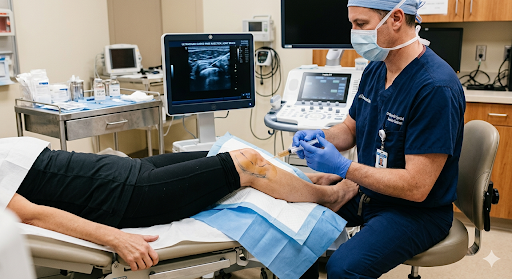
Regenerative medicine at West Texas Wellness Center in Amarillo, Texas uses non-surgical, injection-based therapy to support your body’s own repair of a damaged joint, tendon or disc. It is for knees, shoulders, hips and backs that hurt more than they should but are not yet a surgical case — and for patients who would rather not have surgery at all. Doctor-supervised from consultation through follow-up, at 4714 S. Western St.

Doctor giving an ultrasound-guided stem cell injection into a patient's knee joint.

What We Treat

Regenerative therapy is used most often for:

How It Works

Cartilage, tendon and disc tissue share one problem: very little blood supply. That is why they heal slowly, or stop healing altogether. Regenerative therapy delivers concentrated healing factors directly into the damaged tissue, where the body cannot easily send them on its own, then gives that tissue the conditions to rebuild.

The Therapies We Use

Every plan is built from the therapies below. Which ones you receive, and in what order, depends on the joint, the tissue involved and what your examination shows.

Platelet-Rich Plasma (PRP)
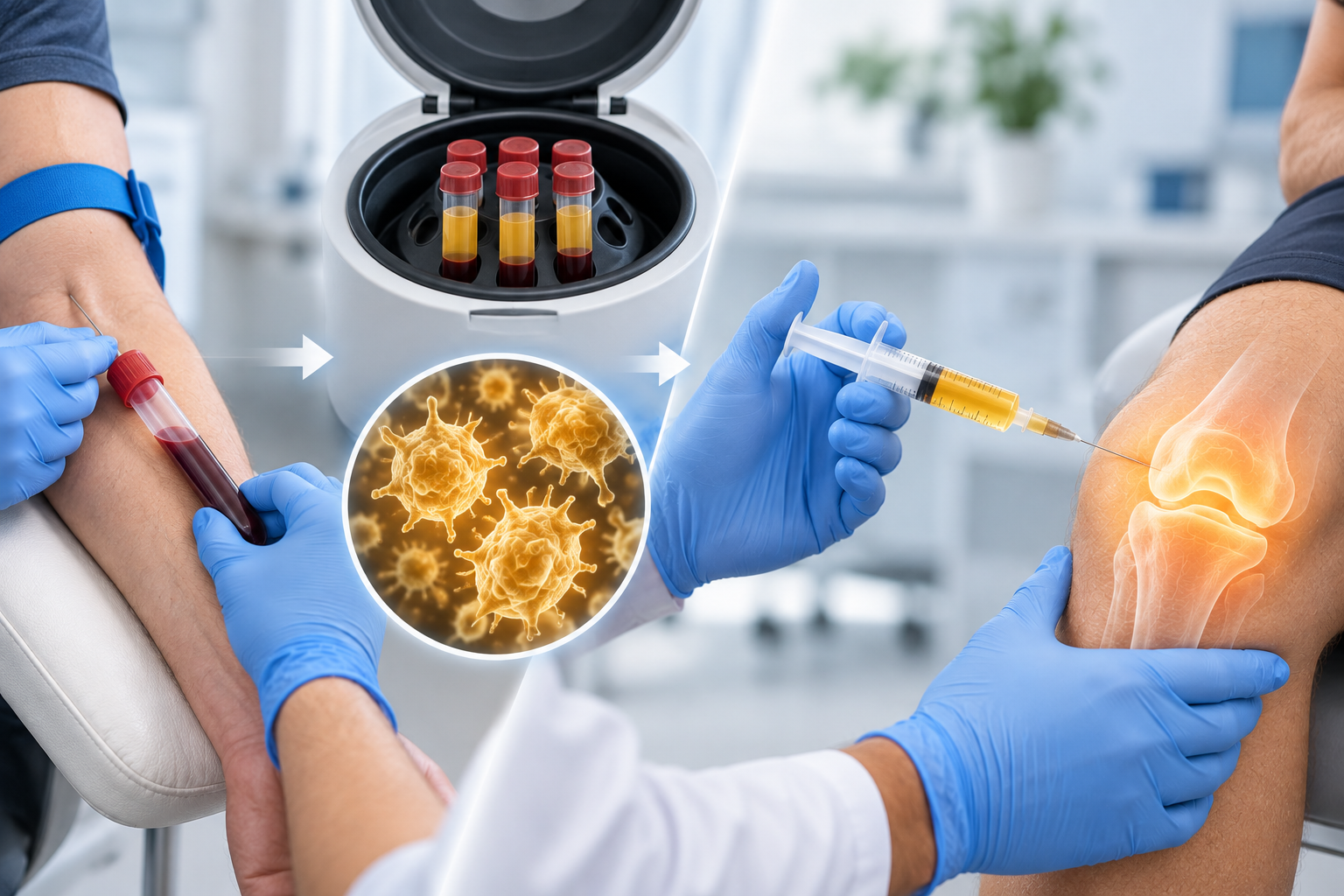
A small amount of your own blood is drawn and concentrated to isolate its platelets, which carry the growth factors your body uses to repair tissue. That concentrate is injected into the injured joint, tendon or ligament, delivering repair signals directly to tissue that has too little blood supply to receive them on its own. Because PRP comes from your own body, there is no risk of rejection.

Prolotherapy
A series of injections that deliberately provoke a healing response in a lax or worn ligament or tendon. Rather than numbing the area, prolotherapy prompts the body to lay down new connective tissue, which can tighten and stabilize a joint that has become loose. It is often used for chronic joint instability, low back and neck pain, and tendon injuries that keep returning.
Perinatal and Amniotic Tissue Allografts
Injectable tissue products derived from donated perinatal tissue, screened and processed by a regulated tissue bank. These allografts are rich in the growth factors and structural proteins that support tissue repair, and are used when a joint needs more support than the patient's own concentrate can provide. Donor material is screened to FDA and AATB standards.
Trigger Point and Joint Injections
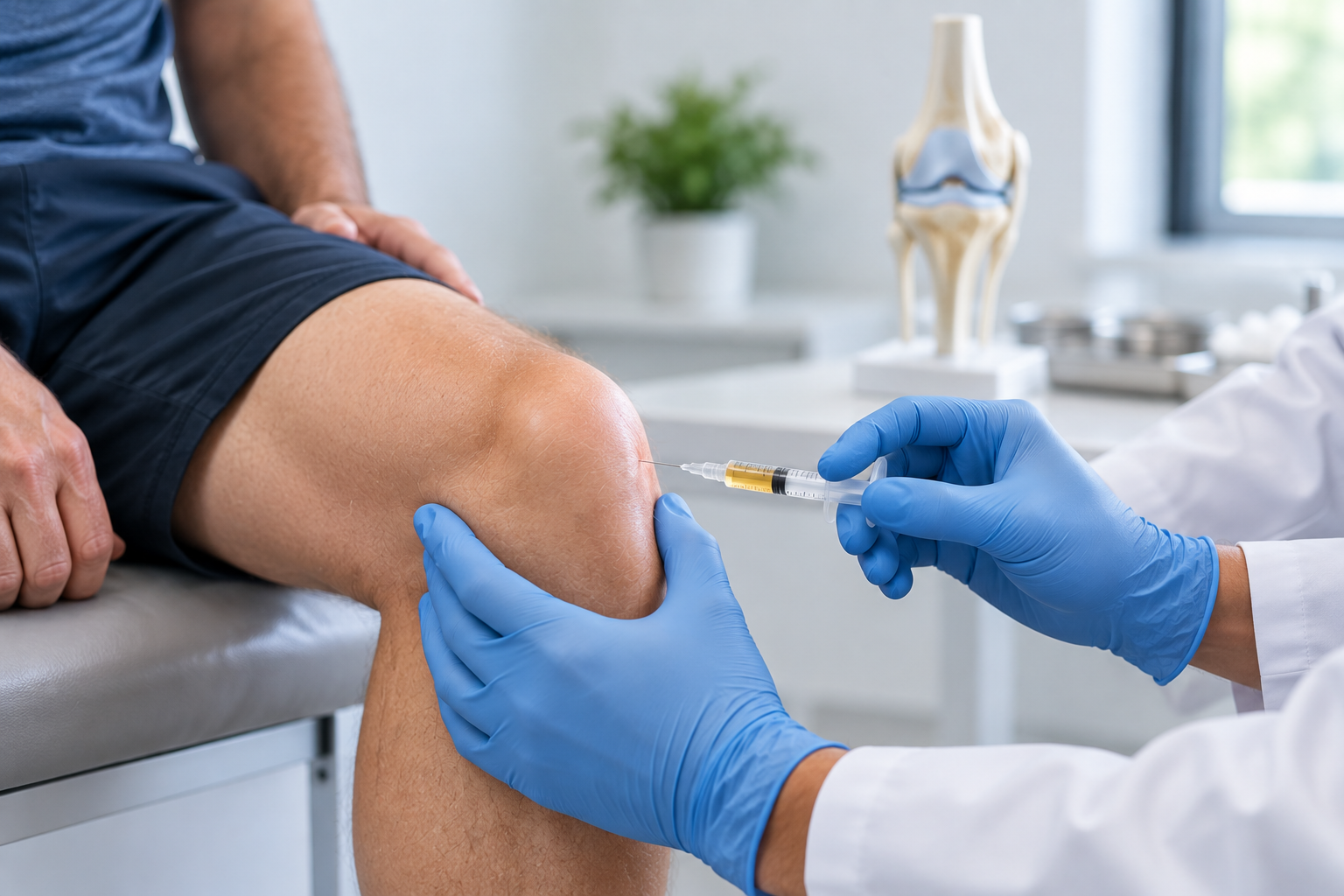
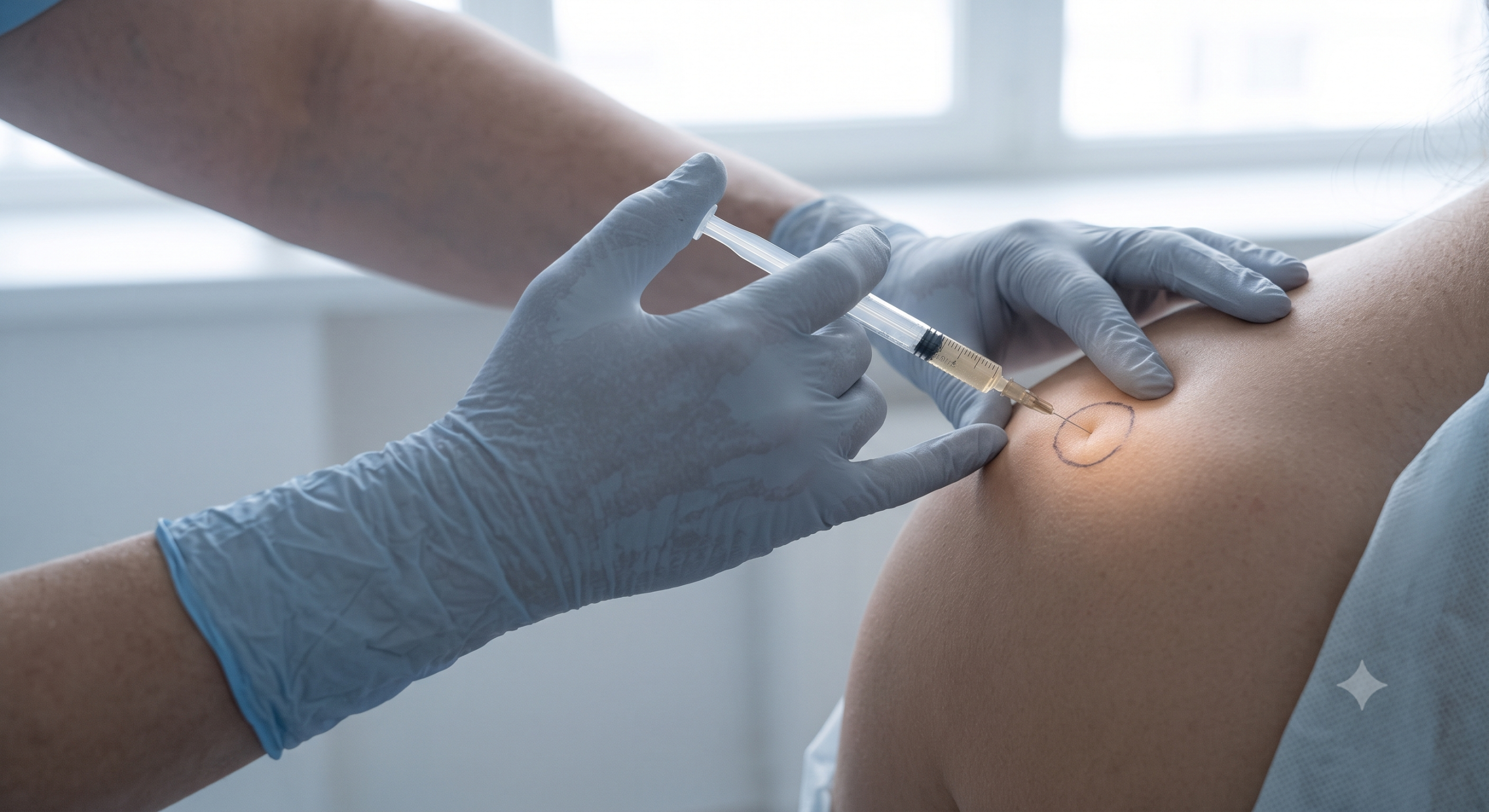
Targeted injections used two ways: to release a knotted, painful band of muscle that is holding a joint out of position, and to place medication or regenerative material precisely inside the joint space. They are frequently used early in a plan to reduce pain enough that the joint can move, and movement is what makes the rest of the plan work.
Shockwave Therapy
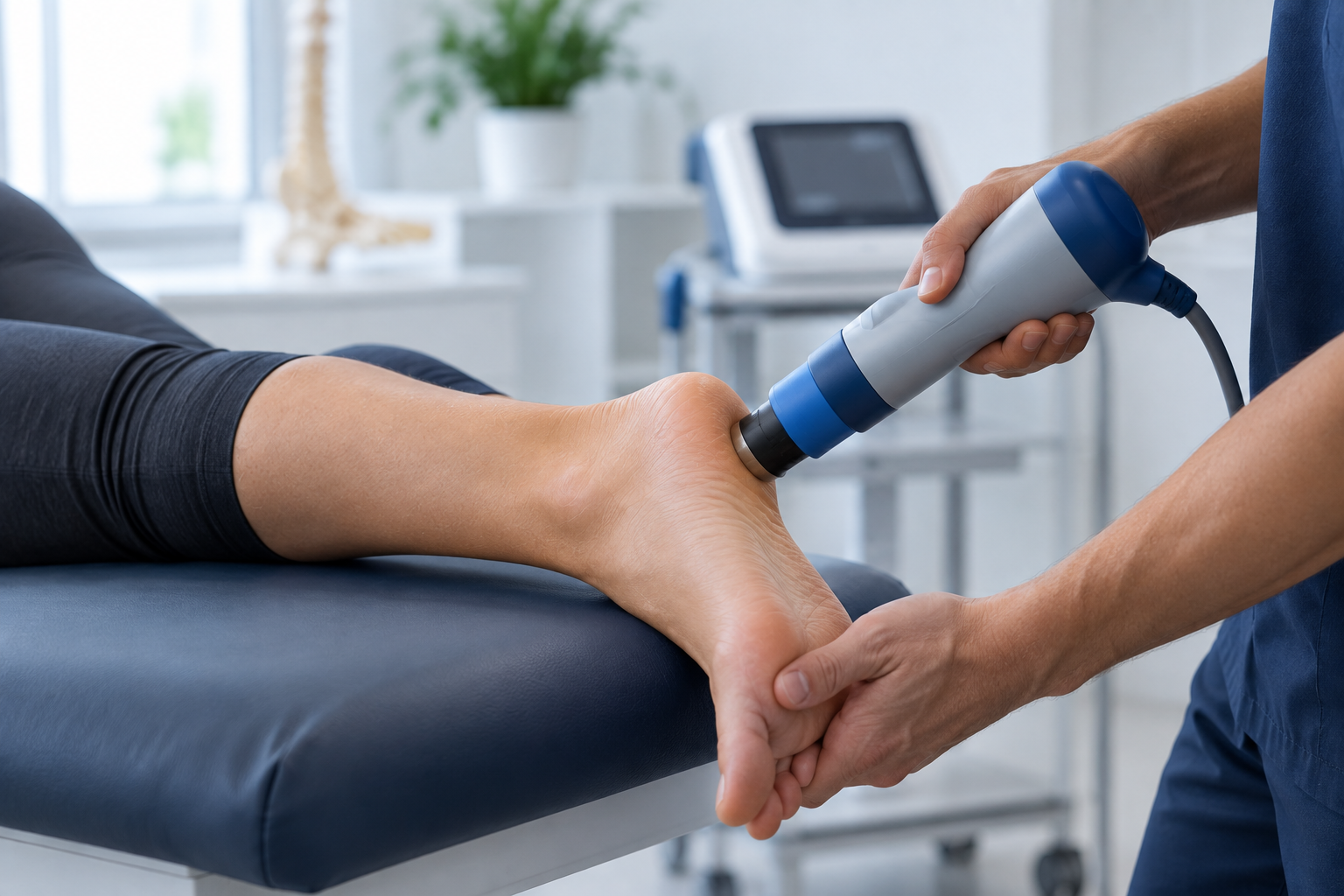
Focused acoustic pressure waves applied to the skin over an injured tendon or joint. The waves stimulate local blood flow and the body's repair activity in tissue that has gone quiet and stopped healing. There are no needles and no medication involved. Shockwave is commonly used for plantar fasciitis, tennis and golfer's elbow, and stubborn tendon pain, and pairs well with injection therapy.
Laser Therapy
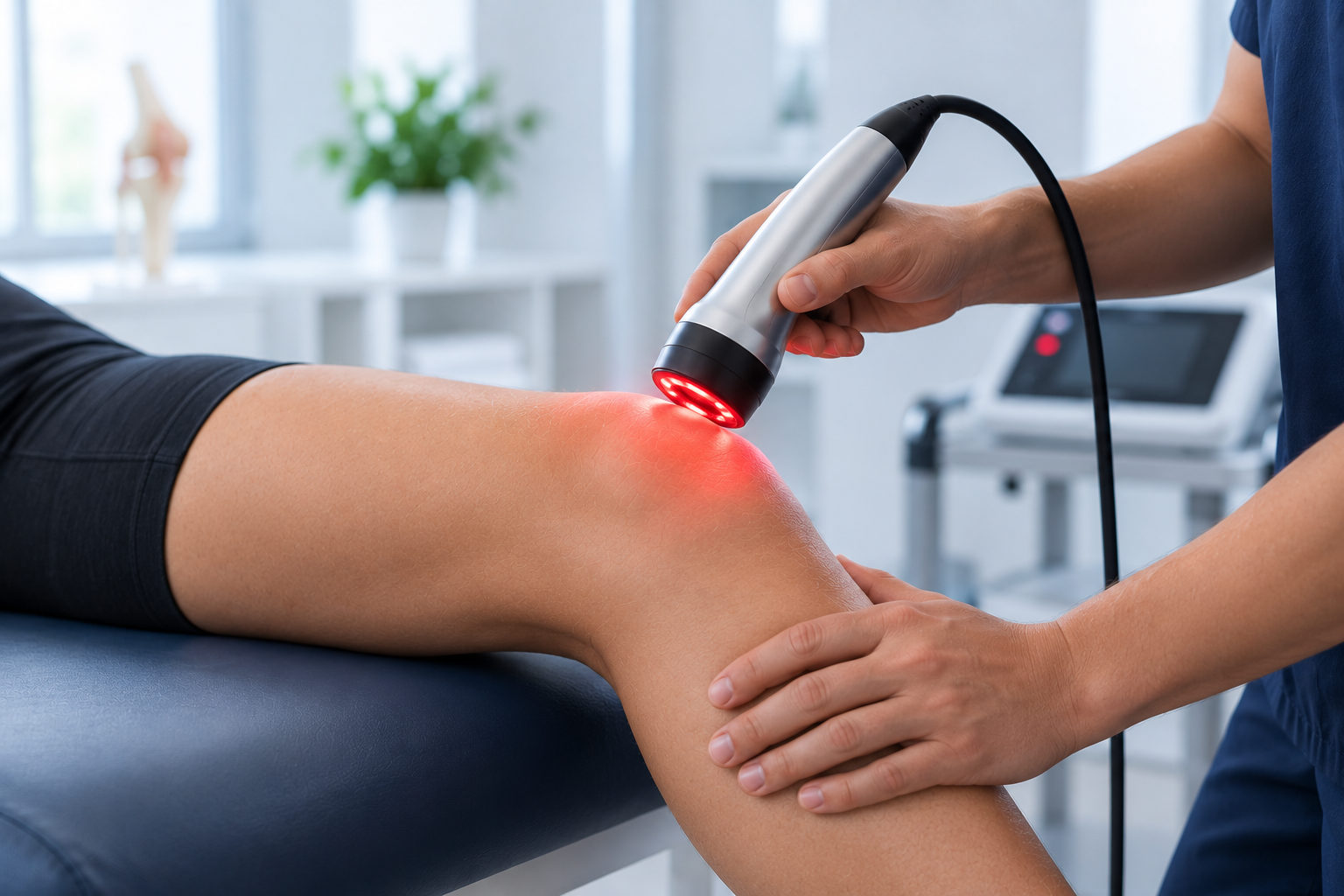
Therapeutic laser applied over the treated area to support circulation and reduce inflammation between injection visits. It is comfortable, takes only a few minutes, and is used as support alongside the therapies above rather than on its own.

Not every patient receives every therapy. Your recommended combination, the number of visits and the full cost are given to you in writing at your consultation, before you decide anything.

What to Expect

✓

Consultation and examination

We review your history, imaging and previous treatment, examine the joint, and determine whether you are a candidate. Some people are not, and we will tell you so.

✓

Your treatment plan

If regenerative therapy is appropriate, you get the recommended therapy, the number of sessions, the expected timeline and the full cost in writing before you decide anything.

✓

Treatment

Injections are performed in-office and take Most patients drive themselves home and return to normal activity

✓

Recovery and follow-up

Repair is gradual. We follow up at and adjust based on how the joint is responding, often alongside chiropractic care or nutritional support to hold the gains.

Why Patients Choose West Texas Wellness Center

Clinic Hours

Monday – Thursday

7:00 AM to 12:00 PM

2:00 PM to 5:00 PM

Friday – Sunday

Closed

Frequently Asked Questions

What is regenerative medicine?

Non-surgical treatment that uses injection-based therapy to support the body’s own repair of damaged joints, tendons and discs, rather than replacing the joint or masking the pain.

Is it surgery?

No. Treatment is done by injection in our Amarillo office. There is no incision, no general anesthesia and no surgical recovery.

Does it hurt?

Most patients describe the injection as brief pressure or aching. The area is numbed first, and some soreness for a few days afterward is normal and expected.

Am I a candidate?

It depends on the joint, how much structural damage is present, and your overall health. The consultation exists to answer exactly that, and we will tell you honestly if you are not.

How long until I feel a difference?

Every case is different. Repair is gradual, and how quickly you notice a change depends on the joint, the tissue involved and how much damage is present. The doctor builds your treatment plan at the consultation and will walk you through the timeline for your specific case.

Does insurance cover regenerative medicine?

West Texas Wellness Center does not accept insurance at this time. Regenerative therapies are generally not covered by insurance in any case. Pricing is given to you in writing at your consultation, and payment options are reviewed with you before you begin.

How much does it cost?

Either a starting price or a plain statement that pricing is given in writing at the consultation.

Is this an alternative to knee replacement surgery?

It depends on your individual condition, symptoms, and overall health. A consultation with the doctor can help determine whether this treatment may be an appropriate option for you or whether surgery should still be considered.

Where are you located, and what are your hours?

West Texas Wellness Center is at 4714 S. Western St., Amarillo, TX 79109. We are open Monday through Thursday, 7 AM to 12 PM and 2 PM to 5 PM. Call (806) 352-1500.